If you came here with questions about Bodybuilding Revealed or Fat Loss Revealed , you can ask me about them on my brand new shiny FORUM . Or read the basics about them from these links: , Fat Loss Revealed or Bodybuilding Revealed. Hope you enjoy the site, Yours ..Will Brink...
Getting closer to genetics based nutrition
If there was one thing that really struck me about the 2009 FASEB conference, it was the extensive amount of research presented in what is clearly the direction that will answer the most essential questions about how food and nutrients interact with our genes.
Without a doubt, the most cutting edge research looking at the relationship between what we eat – be it food or supplements – and the benefits we derive, is the science of nutrigenomics. As the name implies, nutrigenomics looks directly at how nutrients interact with our genes. Wikipedia defines it as “the study of molecular relationships between nutrition and the response of genes, with the aim of extrapolating how such subtle changes can affect human health.” Some of the nutrients we eat are very powerful modulators of our genes. Click Here To Continue Reading
Did a seminar for the Waterbury CT RRT/SWAT team at their Training Division Headquarters 4/15/09. I try to cover a broad range of topics applicable to tactical athletes, such as supplements, nutrition, and training, but considering how extensive each of these topics are, and all could be a long seminar on their own, it’s a balancing act at best.

Click Here To Continue Reading
To HIIT or not to HIIT…
Just about everyone and his mama has heard about High Intensity Interval Training, or HIIT for short. HIIT has been found to have various advantages over other forms of exercise for both fat loss and retaining muscle mass. It seems everyone has jumped on the HIIT bandwagon and regularly talk about how they do 40 minutes or so of HIIT and so on. The problem is, most of the people who claim to be doing HIIT are not. A quick hint: if the person was doing true HIIT, they would not be able to do 20 minutes of it, much less 40! Click Here To Continue Reading
This is a fun highlight vid from 2008 training, from the 12 weeks I worked with them for the CT SWAT Challenge, the third largest such competition in the country. I didn’t produce this particular vid. One of the guys on the team used footage I had taken to make this vid which does a nice job of summarizing the hard work we did.
Anyway, 2009 training gets underway soon (May 2009) and I plan to take it to the next level, hit the ground running this year, and generally step up the training. Like most guys on RRT/SWAT teams, these guys have full time jobs, families, etc, and this is done on their own time, so it takes a lot of dedication for them to do this type of training for 12-14 weeks leading up such a comp. Of course it ultimately leads to improving their abilities for the job, so it’s time well spent.
Enjoy!
Here’s a recent vid with some ideas how people can exercise at home with limited equipment:
If you are interested in a TRX Suspension Trainer, here’s where I got mine:
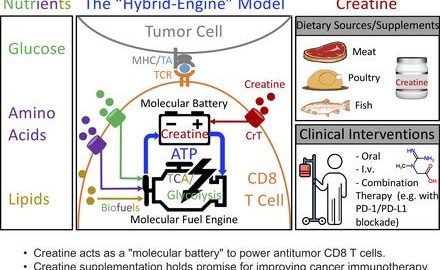
Folks. Just did a podcast interview for Muscular Development. We covered various topics, such as creatine, whey, and others of interest. Check it out here:
Enjoy!
A fairly recent article in the Journal of Special Operations Medicine (JSOM)* examined the Musculoskeletal injuries from 5th group.
The authors decided to quantify the rates and types of these injuries in SF using the records from 5th group, “who treated numerous middle-aged team sergeants with shoulder, back, and knee overuse injuries”
The authors noted “Special Forces, and Ranger units are about 10 to 12 injuries per 100 Soldier-months, which is comparable to collegiate endurance athletes. Of all the types of units studied, Special Forces has the highest incidence of injury rate at 12.1 per 100 Soldier-months.”
This study revealed that physical training caused 50% of all injuries, and 30% were linked to running. Injuries resulted in 10-times the number of profile days (lost work days) as illnesses with the leading reason for outpatient visits in our Group was for musculoskeletal disorders.
The locations of affected musculoskeletal conditions in descending order include: back/neck (31%), ankle (10%), shoulder (10%), and knee (10%).
The authors found that “…over 40% of all clinical diagnoses in the 5th Group Clinic were for musculoskeletal problems.” This translated into injured members of 5th group being put on “light duty” an average of 20 to 30 days each which has “significant” operational impact on the unit.
It was interesting to note that in other army units studied, musculoskeletal injuries are more common in the lower extremities (e.g., knees and ankles) but in SF, upper extremity injuries (e.g., lower back, upper back, shoulders, etc) are more common. The authors theorized “This may be due to the slightly older average age of our Soldiers versus conventional units, in addition to the cumulative effect of repetitive micro trauma from airborne operations, combatives training, wearing heavy body armor, and carrying heavy loads.”
This article covered a bunch of additional info about injury rates and other details interested parties (trainers, docs, etc) can look up the full article for additional details there. Of most interest to me, was their comments on prevention:
“Finally to focus more on prevention, Special Forces Groups should modify unit physical training programs to incorporate the fitness and performance fundamentals used in today’s top athletic programs. Military researchers have shown that modified physical training programs can result in lower injury rates with improvements in physical fitness. Training regimens that emphasize core strength and cross-training would likely increase physical readiness while decreasing the incidence of spine and lower extremity injuries.”
I agree with all of the above. As mentioned, training hard and training smart, are not always the same thing. The latter leading to greater performance and reduced injury rates, with improved operational readiness and (potentially) greater operational longevity for the SF soldier. The top coaches involved in “today’s top athletic programs” follow similar guidelines I mentioned regarding programs that follow a wave form pattern vs. a linear pattern I had mentioned in other blog posts here.
I’m happy to see the medical and training community within the SOF community is starting to see the benefits in both performance -and reduced rates of injuries – following more modern concepts in training already being utilized by the top athletic programs and or coaches in the field. The authors finished their report by summing it up nicely:
“By making these changes to training and resourcing, Special Forces Groups will be investing in our most lethal weapon—the individual Special Forces Soldier.”
* Clinical Diagnoses in a Special Forces Group: The Musculoskeletal Burden
James H. Lynch, MD, MS and Mark P. Pallis, DO, FAAOS. Journal of Special Operations Medicine (JSOM): Volume 8, Edition 2 / Spring 2008, 76-79
2009 Combat Sports Performance Summit
By Will Brink ©2009
Mixed Martial Arts (MMA) is one of the fastest growing – not to mention popular – sports in the world. I recently attended the 2009 Combat Sports Performance Summit, which was held at Excel Sport & Fitness in Waltham, Massachusetts on Match 1st.
This was one day seminar covered a wide range of topics specific to the strength & conditioning needs for MMA and other Combat Sports of interest. The audience was a mix both MMA athletes and coaches, and one wise guy writer made up of yours truly. Click Here To Continue Reading
Folks, I just put up on the BrinkZone that covers the facts behind this popular carb source. See the main page. However, it can also be read on Muscular Development’s web site here:
As you all know, I like to burst myths, and this one is no different….enjoy!